
One northern NJ plumber lists $8,000 to $25,000+ for a full sewer line replacement and $3,000 to $8,000 for a spot repair as planning ranges. In NYC, pipe lining is not allowed by code. What each method costs and what to check before you sign.
A full sewer line replacement in northern New Jersey runs about $8,000 to $25,000 or more, and a spot repair about $3,000 to $8,000, by one northern NJ plumber's 2026 planning ranges.
In New York City, pipe lining is not allowed by the plumbing code. Before you sign a big quote, see the whole line on camera.
New Jersey: published costs by method (northern and South Jersey firms)
| Method | Published range | Source |
|---|---|---|
| Lining or pipe bursting, whole job | $8,000 to $20,000 | Maccabi Plumbing, northern NJ, 2026 |
| Lining or pipe bursting, per foot | $80 to $250 | Atlantic County Sewer Pro, South Jersey, Mar 2026 |
| Digging (open trench), per foot | $50 to $150 | Atlantic County Sewer Pro, South Jersey, Mar 2026 |
| Spot repair (one section) | $3,000 to $8,000 | Maccabi Plumbing, northern NJ, 2026 |
| Full replacement, house to street | $8,000 to $25,000+ | Maccabi Plumbing, northern NJ, 2026 |
| Town permit | $200 to $800+ | The Sewer Kings, South Jersey, 2026 |
Is a $10,000 to $18,000 quote fair?
It can be. A quote in that range sits inside the ranges from northern and South Jersey firms above, for lining, bursting or a full replacement.
What moves a job to the top: a long or deep line, a driveway, trees or a sidewalk on top, and opening the street.
For comparison, Angi's national guide lists lining at $90 to $250 a foot, pipe bursting at $60 to $200 and digging at $50 to $200 (Angi).
Per foot, the ranges are about the same; whole-job New Jersey ranges sit above Angi's national $1,388 to $5,323. Arrow Sewer and Drain, which serves Union County, says most New Jersey repairs land between $10,000 and $60,000 or more.
New York City: lining is not allowed
The 2022 NYC Plumbing Code says: "Cured-in-place pipe (CIPP) and epoxy spray pipe lining systems shall not be used." (NYC Plumbing Code 701.10) A lining quote for a house sewer in NYC needs a clear answer on how it meets that rule.
The code does not name pipe bursting, so ask the plumber and DEP how a bursting quote is permitted.
- Only a licensed plumber can get the DEP permit to repair or relay a sewer house connection.
- New York City's water agency says the average sewer line break repair costs "between $10,000 and $15,000" (NYC DEP).
- A New York City plumber's 2026 guide puts a full replacement at $8,000 to $25,000.
Which method fits which pipe
| Method | What it is | Best for |
|---|---|---|
| Lining (CIPP) | A resin liner cured inside the existing pipe | A pipe that still holds its shape (not in NYC) |
| Pipe bursting | A new pipe pulled through, breaking the old one outward | A worn pipe on a good path |
| Digging (traditional excavation) | Uncover and replace the section or the whole line | Fully collapsed pipe and sags |
Angi notes that "trenchless methods are not suitable for pipes with major structural problems such as collapse or improper sloping."
What pushes a quote to the top of the range
- Depth and length of the sewer lateral.
- Pipe material and condition. Old cast iron or clay, root intrusion or a collapse can change the method.
- The street. Under a town road, the job needs a road opening permit. Cranford requires one from "any contractor removing and/or replacing and/or constructing new sewer lines" (Township of Cranford).
- State rules. Under New Jersey's construction code, replacing sewer piping is not "ordinary maintenance" (N.J.A.C. 5:23-2.7), so the job goes through the town construction office. For like-for-like replacement, work can start after notice, with the permit application within five business days.
- Restoration is often its own line on the bill: the yard, mature landscaping, driveway, sidewalk or street. A New York City plumber's guide adds $1,000 to $4,000 for a street permit and restoration.
When to get a second camera look
Get one before any sewer repair when no footage was shown, when a full replacement is quoted for one defect, or when the method is not explained.
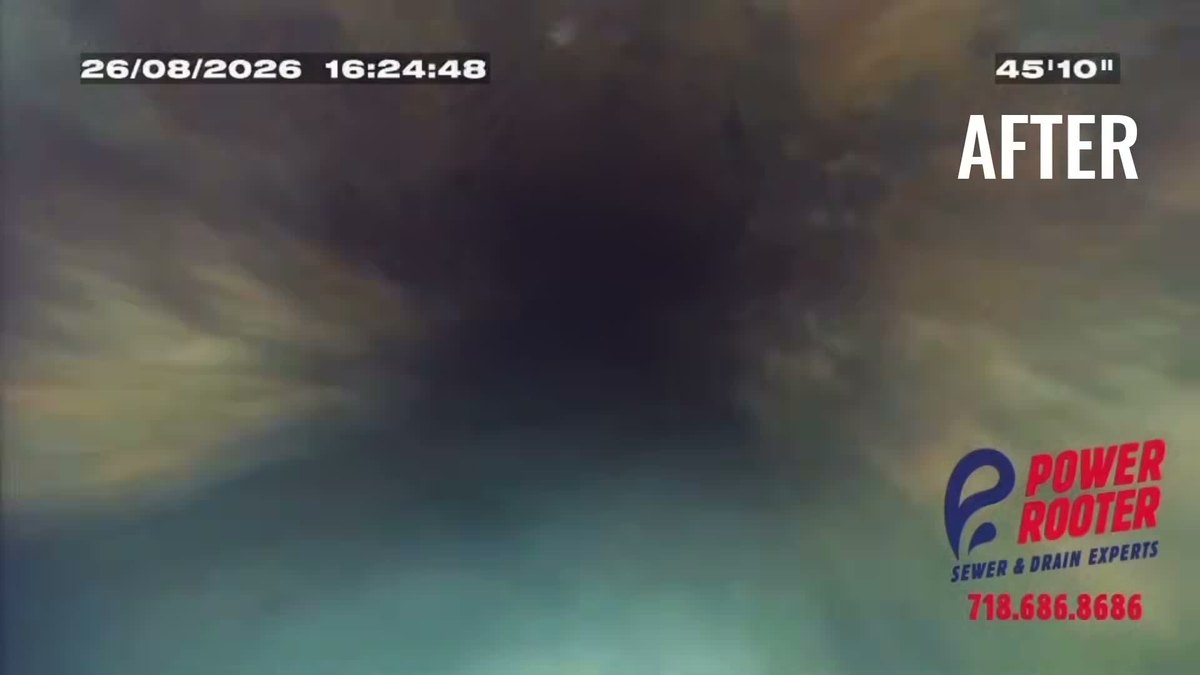
Ask for the whole video with distance markers. The full run shows whether one section or the whole pipe is bad. That is often the difference between a spot repair and a full replacement.
Ask before you sign
- Can I have the full camera video? A New Jersey sewer firm puts it plainly: "Ask for the camera footage before you approve a repair."
- How many feet from the house is each problem, and how deep?
- Why this method, and why not a spot repair?
- Are the permit, cleanout and a post-job camera included? Another NJ firm calls a quote missing them "a red flag".
- Is the problem on my side of the line or under the street?
Get the line on camera first
Power Rooter's camera inspection gives you HD footage of the line, where each problem is and how deep, and a report you can show to anyone quoting the work. Book a sewer camera inspection in Union County ((908) 666-8686).
In New York, book a sewer camera inspection in Brooklyn or a sewer scope inspection in Park Slope ((718) 686-8686).
Common questions
Does insurance cover sewer line repair or replacement?
Policies differ. Ask your insurer whether you have a service line or sewer backup endorsement and what it covers.
What is the cheapest way to fix a sewer line?
A spot repair of one damaged section costs less than a full replacement, when the camera shows the rest of the line is sound.
Who pays for the part under the street?
In New York City the property owner owns the line to the city main. In New Jersey it depends on the town, so ask the town before work starts.
KEEP READING
More from Power Rooter
Sewer Backup in a Brooklyn Basement: What to Do First, Backwater Valves and Insurance
If sewage backs up into your Brooklyn basement, stay out of the water, report it to 311 and take photos. On 75% of Brooklyn backup calls in the past year, DEP found no city sewer problem (counts calls, not pipe condition).
Who Is Responsible for the Sewer Line From the House to the Street? Westfield, Cranford and NYC
In New York City, the property owner owns the whole sewer line to the city main in the street. Westfield's Public Works repairs broken sewer mains, and Cranford checks each backup to decide whose it is. Here is what each place says.
Orangeburg Pipe, Clay or Cast Iron: What Sewer Pipe Is Under an Older House in Westfield, Cranford or Brooklyn
Orangeburg pipe is a fiber sewer pipe of compressed wood fibers and coal tar pitch, used in many towns in the mid-1900s. As it ages it flattens and loses its round shape. A camera inspection gives clues to whether you have Orangeburg, clay or cast iron.
Dealing with this right now? We run same-day trucks across NYC and northern NJ.
Call (718) 686-8686