
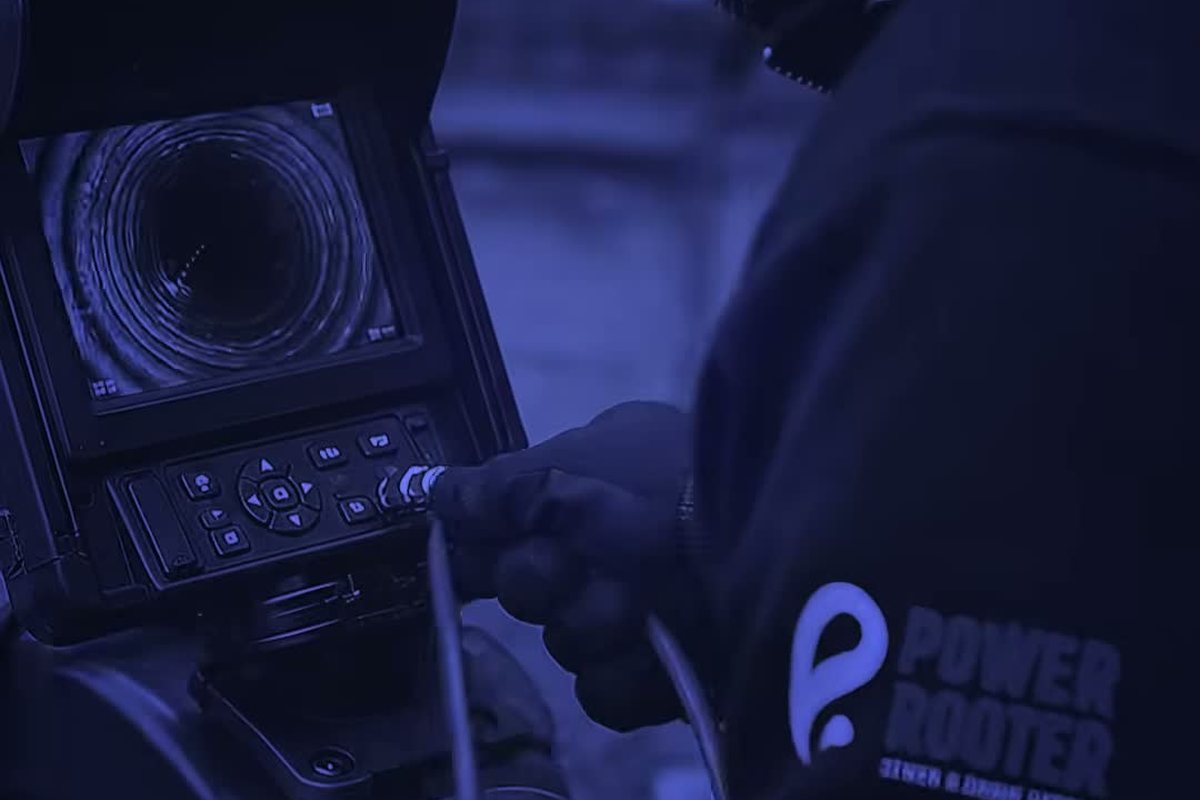
Yes, get a sewer scope before you buy an older house in Westfield or Cranford. A standard home inspection does not usually look inside the buried sewer line, and most owned homes in both towns were built before 1960.
Yes. Get a sewer scope inspection before you buy an older house in Westfield or Cranford.
A standard New Jersey home inspection does not usually look inside the buried sewer pipe, the lateral that runs from the house to the street sewer system, and most owned homes in both towns were built before 1960.
Why a home inspection is not enough
John Martino, a New Jersey home inspector who is not connected to Power Rooter, says the line "cannot be inspected during a standard NJ home inspection. A camera inspection is the only way to see what is really happening." (LookSmart Home Inspections) He adds: "That's why in older homes I always recommend one."
| Town | Owned homes built before 1960 | Median year built |
|---|---|---|
| Cranford | 81% | 1951 |
| Westfield | 68% | 1953 |
Census figures (ACS 2024): 81% of owned homes in Cranford and 68% in Westfield were built before 1960. An older house does not mean an old pipe, but it is a reason to check.
The seller says they snake the line every year
That may mean the line clogs often, or has slow drains. Ask why, and ask for the cleaning records.
Snaking clears a line; it does not fix what keeps clogging it. Ask for the cleaning records and any camera footage, and scope it yourself.
New Jersey's seller disclosure form asks about "backups, or other problems" with plumbing, but it also says the form "is not a warranty by Seller" and that checking the property is the buyer's job (N.J.A.C. 13:45A-29.1).
What a sewer scope finds
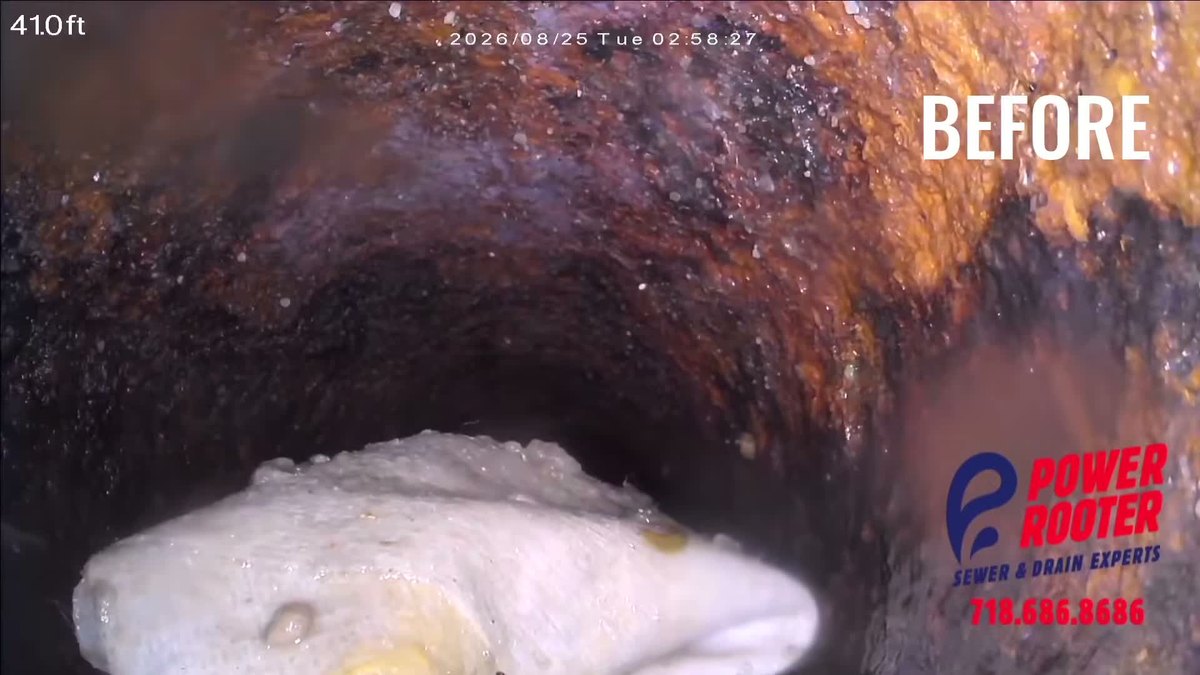
- Tree roots at the joints (root intrusion). Martino: "Roots are the number one problem I see with clay lines."
- Cracks and breaks. "Clay is brittle and cracks, cast iron corrodes and flakes apart, and Orangeburg collapses."
- A belly, a sag where water and waste sit.
- Offsets, where pipe sections no longer line up.
- The pipe material and how far down the line each problem is.
Is it worth it if most scans find little?
Yes.
Reuben Saltzman, a Minnesota home inspector with no tie to Power Rooter, says most scans on old houses find roots, not disasters: "It's the situations where major problems occur that make it worth having a sewer scan done." (Structure Tech)
Sewer scope inspection cost
Redfin puts a sewer camera inspection at "around $125 - $350" nationally (Redfin). New Jersey sewer inspection firms post roughly $200 to $800.
A repair costs far more: one northern NJ plumber lists $3,000 to $8,000 for a spot repair and $8,000 to $25,000 or more for a full replacement (Maccabi Plumbing, 2026). The scope is the cheap step.
How to get a scope you can trust
- Hire your own inspector, not the seller's plumber.
- Ask for the whole video, not a clip. The InterNACHI sewer scope standard says to "record the entire video and provide the video to the client" (InterNACHI).
- Ask how far each problem is from the house, and whether the camera reached the street connection.
What to do with a bad result
| The camera shows | What buyers usually do |
|---|---|
| Clean line or light roots | Close. Plan regular cleaning. |
| Heavy roots or grease | Ask the seller to clean it and share after footage. |
| Crack, belly, offset or Orangeburg | Get a repair quote. Ask for a credit or price cut before closing. |
| Collapse | Treat it as a major repair. Negotiate before you sign. |
Book a sewer scope in Westfield or Cranford
Power Rooter records HD footage of the line, notes where each problem is and how deep, and keeps before and after video in your Rooter Record account.
Book a sewer camera inspection in Westfield or a sewer scope inspection in Cranford, or call (908) 666-8686. If the camera finds roots, Power Rooter also does hydro jetting in Westfield.
Common questions
Is a sewer scope part of a normal home inspection?
Usually not. A standard home inspection does not usually look inside the buried sewer line. A sewer scope is a separate camera inspection.
Does the NJ seller disclosure cover the sewer line?
It asks the seller about backups and plumbing problems, but it says it is not a warranty and that the buyer must check the property.
Who pays for the sewer scope?
The buyer usually orders and pays for it during the inspection period, the same way as the home inspection.
KEEP READING
More from Power Rooter
Sewer Backup in a Brooklyn Basement: What to Do First, Backwater Valves and Insurance
If sewage backs up into your Brooklyn basement, stay out of the water, report it to 311 and take photos. On 75% of Brooklyn backup calls in the past year, DEP found no city sewer problem (counts calls, not pipe condition).
Who Is Responsible for the Sewer Line From the House to the Street? Westfield, Cranford and NYC
In New York City, the property owner owns the whole sewer line to the city main in the street. Westfield's Public Works repairs broken sewer mains, and Cranford checks each backup to decide whose it is. Here is what each place says.
Orangeburg Pipe, Clay or Cast Iron: What Sewer Pipe Is Under an Older House in Westfield, Cranford or Brooklyn
Orangeburg pipe is a fiber sewer pipe of compressed wood fibers and coal tar pitch, used in many towns in the mid-1900s. As it ages it flattens and loses its round shape. A camera inspection gives clues to whether you have Orangeburg, clay or cast iron.
Dealing with this right now? We run same-day trucks across NYC and northern NJ.
Call (718) 686-8686